The Future Is in Your Hands: Portrait Photography from Senegal
Overview of the Book #
The Future Is in Your Hands: Portrait Photography from Senegal is a 2023 scholarly monograph by Beth A. Buggenhagen, an anthropologist and Associate Professor at Indiana University Bloomington. Published by Indiana University Press as part of the Material Vernaculars series (edited by Jason Baird Jackson), the book explores the social, cultural, and material history of portrait photography in Senegal from colonial times through independence to contemporary practices. Buggenhagen draws on ethnographic fieldwork, archival research (including collections at the Smithsonian and in Senegal), and analysis of circulating images to examine how portraits embody themes of migration, family, identity, visibility, separation, rupture, and repatriation.
The title suggests ideas of control and the future. It shows portraits that are actively “held” and shared by people from Senegal, shaping their own and their community’s futures around the world.
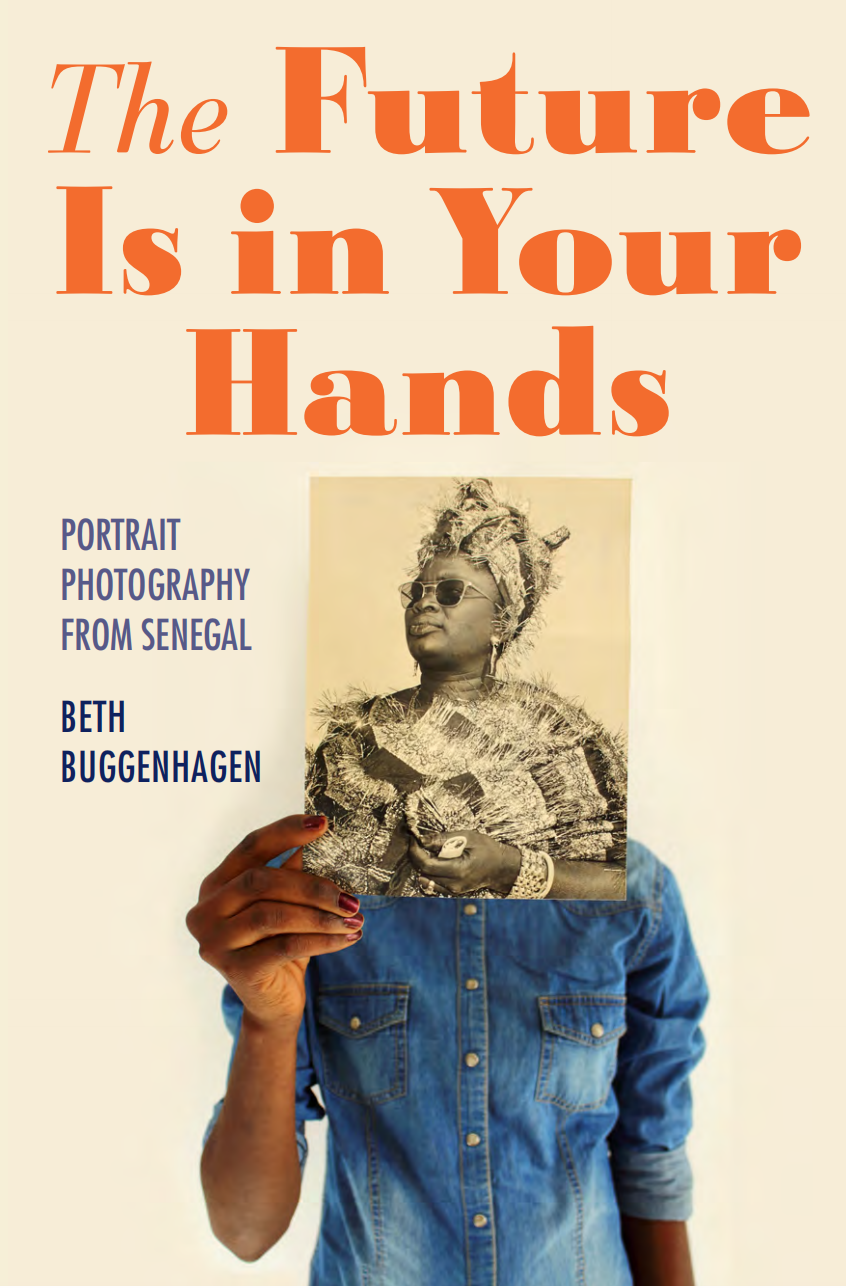
The book cover features a person holding a vintage black-and-white portrait of an elegantly dressed woman (likely from mid-20th-century Senegal), symbolizing the tactile, intergenerational transmission of images.
Structure and Key Chapters #
The book spans 285 pages, with a bibliography and index. Based on the table of contents:
-
Acknowledgments (pp. ix–xii): Buggenhagen thanks collaborators, institutions (e.g., Smithsonian’s Eliot Elisofon Photographic Archive, National Archives of Senegal, IFAN), colleagues, students, and family. She highlights influences from curators, photographers like George Osodi and Omar Victor Diop (whom she hosted at IU), and the impact of the COVID-19 pandemic on research. The book is dedicated to her daughters, Evelyn and Ada.
-
Introduction: Portraits and the Weight of the Future (p. 1): Sets the theoretical frame—portraits as material objects carrying emotional and aspirational “weight,” linking past, present, and future in Senegalese lives.
-
Chapter 1: “Uncontrollable Circulation”: Portraiture in and out of Senegal (p. 36): Examines global dispersal of Senegalese portraits through colonial collections, migration, and trade.
-
Chapter 2: “Send Us Your Photos”: Portraiture in Bingo Magazine (p. 85): Analyzes Bingo (a popular 20th-century West African magazine) as a platform where readers submitted portraits, fostering transnational connections among the diaspora.
-
Chapter 3: Family Portraits (p. 134): Focuses on domestic and familial uses of photography in Senegal.
-
Chapter 4: Ibrahima Thiam’s Vintage Portraits (p. 167): Case study of a contemporary Senegalese photographer working with historical styles and archives.
-
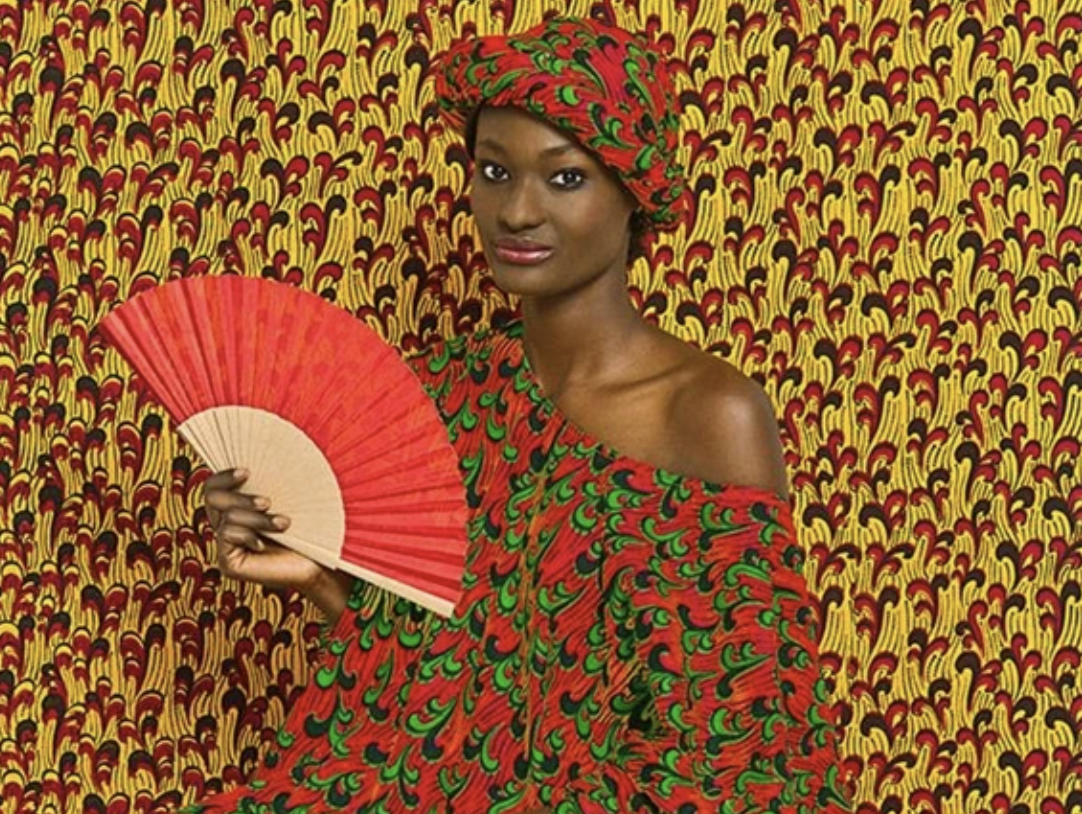
Chapter 5: Cut from the Same Cloth: Omar Victor Diop’s The Studio of Vanities (p. 202): Explores Diop’s series portraying young urban African creatives (fashion designers, musicians, etc.) in staged, vibrant portraits that reference historical studio photography while celebrating modern African vanities and identities.
- Relevant Sources: < ‘Kulturen i Lund’
Omar Victor Diop: The Studio of Vanitiese.
-
Epilogue: New Thresholds for “Reigniting Collections” (p. 237): Discusses efforts to digitize, repatriate, or recontextualize Senegalese photographic archives amid museum ethics and decolonization debates.
Themes and Contributions #
Buggenhagen complicates linear histories of African photography (often dominated by colonial narratives) by emphasizing Senegalese agency in producing, circulating, and interpreting portraits. Key themes include:
- Materiality and Circulation — Photos as tangible objects exchanged in migration networks, carrying social value.
- Gender and Islam — Building on her prior work (Muslim Families in Global Senegal, 2012).
- Archives and Repatriation — Critiques Western museum holdings while noting digitization’s role in broader access.
- Contemporary Art — Bridges historical and modern practices, e.g., Diop’s celebratory portraits of Africa’s urban youth. The book situates Senegalese portraiture within broader African photography histories (e.g., alongside works on Mama Casset or other studio photographers).
- Relevant Sources: 1.Senegalese photography’s long, often buried, history
<a href='https://www.aramcoworld.com/articles/2025/nd25/delving-into-senegals-past-a-conversation-with-giulia-paoletti' target="_blank"> 2.Author Giulia Paoletti Traces History of Senegal’s Photography</a >
Significance #
This ethnographic and visual anthropology text contributes to studies of material culture, African art, and postcolonial photography. It highlights how portraits help Senegalese navigate global volatility, maintaining ties across distances.
In what follows, I focus on two aspects of the book that I find most compelling.
The two sections that interest me most #
Materiality and Circulation: Photos as Tangible Objects in Migration Networks #
In The Future Is in Your Hands, Buggenhagen treats photographs not simply as images to be looked at, but as things to be held, passed on, and lived with. Rather than focusing on representation alone, she foregrounds the material presence of portraits and shows how they carry social relations, aspirations, and emotional weight. Drawing on ethnographic encounters, she describes photographs as “objects of affect” (Edwards 2012, cited on p. 29) that move through migration networks and connect family members across distance while accumulating layered social value. This concern with circulation and materiality runs through the introduction and Chapter 1, “Uncontrollable Circulation,” where Buggenhagen draws on Spitulnik’s notion of “double articulation” to show how photographs are shaped by social practices and, at the same time, actively enable them (Spitulnik 1998, cited on p. 29).
One of the book’s most compelling contributions lies in its attention to the sensory and tactile qualities of photographs. Buggenhagen repeatedly moves “from the visual to the visceral” (p. 29), insisting that photographs are experienced through touch as much as sight. A particularly vivid example comes from her collaboration with the artist Ibrahima Thiam. When handling archival postcards, Thiam searches for embossed studio seals and slowly passes his hand across their surfaces (p. 56). This moment captures how photographs possess “layers and depth” (p. 59), aligning with Jennifer Deger’s idea of “thick photography,” in which images evoke memory and affect through embodied engagement (Deger 2016, cited on p. 59). Early photographic forms such as daguerreotypes, described as “jewels… delicate and unstable” (p. 63), required careful casing and handling. These practices resonate with Sufi traditions of treating sacred objects, including Qur’ans, with similar attentiveness.
Circulation, however, is never fully controllable. As the chapter title suggests, photographs move in unpredictable ways and produce what Buggenhagen, following Peffer, calls a “diaspora of images” (Peffer 2013, cited on p. 61). Family portraits travel through albums, letters, postcards, markets, and eventually archives and museums. Within migration contexts, these images often stand in for absent family members and help manage what Buggenhagen describes as the “fragility of life” under conditions of economic pressure and long-term separation (p. 28). Since the 1960s, labor migration from rural areas to cities and overseas has reshaped Senegalese family life (p. 17), and photographs become one way of holding relationships together. Migrants pose in front of landmarks such as the Eiffel Tower (p. 19), while mothers exchange bridal portraits to arrange marriages across distance (p. 19). Through these movements, photographs “condense social relations” (p. 28) and gain or lose value through processes of “bundling” as they shift between domestic, commercial, and institutional settings (Keane 2005, cited on p. 30).
The social power of these circulating images is evident in everyday rituals. Portraits are exchanged during Islamic naming ceremonies (ngente) to “sweeten the marriage” (p. 28), project stability and success, and repair strains caused by migration (p. 29). At the same time, Buggenhagen does not romanticize circulation. She shows how colonial postcard production extracted family images into commercial and imperial circuits and reinforced unequal hierarchies (p. 60). Contemporary artists such as Thiam respond to this history by reworking and “reenergizing” archival images and returning attention to their material presence and sensory force (pp. 37, 56).
Taken together, Buggenhagen’s analysis unsettles linear or purely visual accounts of photography. Materiality is not secondary to meaning; it is what enables photographs to act. In volatile migration networks, images do not merely record relationships. They actively materialize and sustain them.
Gender and Islam: Building on Prior Work #
Buggenhagen’s discussion of gender and Islam in The Future Is in Your Hands builds on her earlier ethnography, Muslim Families in Global Senegal: Money Takes Care of Shame (2012), which examined economic uncertainty, gift exchange, and social reproduction within transnational Muslim households. In this book, those concerns are reframed through portrait photography. Although “gender” does not appear as a standalone index term, gendered relations shape nearly every photographic practice Buggenhagen describes.
Islam emerges not as an obstacle to photography, but as a framework that gives images meaning. By drawing on Sufi concepts such as zahir (the visible) and batin (the unseen) (p. 37), Buggenhagen challenges assumptions about Islamic iconoclasm. Portraits of religious leaders circulate as devotional objects. Followers press images of shaykhs to their foreheads to receive baraka, or blessings (p. 37). The tactile qualities of early daguerreotypes again matter here. Their jewel-like material form supported Sufi practices of contemplation (p. 63), while colonial photographs of Muslim figures could also be reappropriated for devotional use (p. 63). Within families, portraits mark Islamic life events such as naming ceremonies, where women’s roles as mothers and community members are made visible (p. 28).
Gendered experience becomes especially apparent in contexts of migration and economic strain. Buggenhagen recounts stories of women navigating poverty, polygamy, and tensions between co-wives (p. 17). In these situations, photographs help them endure prolonged separations, a form of munn or endurance (p. 28). Women exchange images to sustain emotional bonds and manage social obligations (pp. 19, 28), echoing Buggenhagen’s earlier analysis of shame, value, and gendered responsibility. Practices such as veiling and digital self-editing reveal how piety adapts to new media environments. Ami’s decision to deactivate online profiles showing uncovered hair (p. 19) illustrates how moral concerns shape photographic circulation. Historical figures such as the signares, wealthy women involved in colonial trade and marriage, further complicate gendered histories of visibility and agency (p. 61).
Across these examples, portraits function as tools of social reproduction. They help buffer individuals from divorce, financial hardship, and the emotional costs of mobility (p. 28), repairing fractures within transnational Muslim families. By bringing gender, Islam, and materiality into the same analytical frame, Buggenhagen shows how photographs circulate not only as images, but as moral and relational resources.
#Book SharingLast modified on 2025-07-07